
Archives Exhibit

Queer Sacramentality


Inhabiting the Sacramental Tradition

The Church of the Beloved Disciple understood LGBTQ inclusion not as an alternative to Catholic sacramental tradition but as a claim upon it. Its Ordinary of the Mass, Eucharistic vessels, vestments, incense, crucifixes, and processions situated the congregation within recognizable forms of Catholic sacramental worship. Yet these inherited forms acquired new significance when practiced by an openly LGBTQ congregation. The Eucharist was celebrated for a community often excluded from Christian sacramental life, while Corpus Christi processions carried that sacred presence—and the congregation itself—into the streets of Manhattan. Queer sacramentality began here not with the abandonment of tradition, but with LGBTQ Christians inhabiting it fully and making its rituals, objects, bodies, and sacred presence their own.

 
http://d2osek5pf4af91.cloudfront.net/archive_objects/LGBTQ-RAN/CBD_078.pdf

Prepared by Robert Mary Clement for the Church of the Beloved Disciple, this Ordinary of the Mass adapted historic Western Catholic liturgical forms for the congregation’s worship, rooting its LGBTQ-affirming ministry within an inherited sacramental tradition.

http://d2osek5pf4af91.cloudfront.net/archive_objects/LGBTQ-RAN/CBD_081.jpeg

Consecrated and signed by Bishops George Augustine Hyde and Robert Mary Clement on October 5, 1980, this antimension joined Eucharistic worship to episcopal authority, linking the Church of the Beloved Disciple to a wider independent Catholic tradition.

http://d2osek5pf4af91.cloudfront.net/archive_objects/LGBTQ-RAN/CBD_080.jpeg

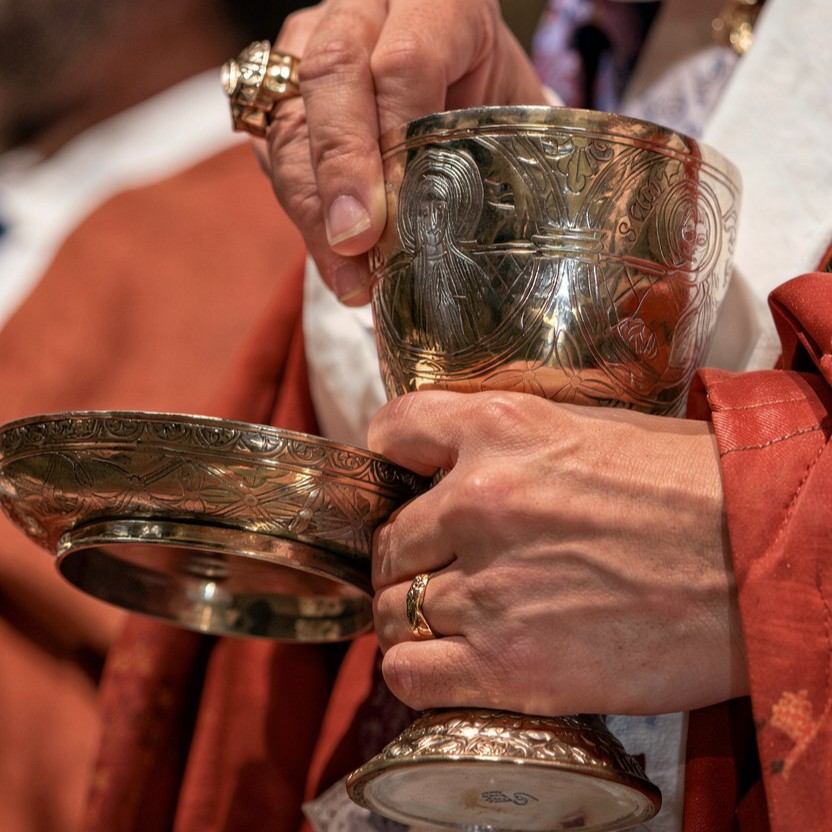
Designed by Leo M. Joseph circa 1970, these hand-engraved silver Eucharistic vessels were created for the Church of the Beloved Disciple.

http://d2osek5pf4af91.cloudfront.net/archive_objects/LGBTQ-RAN/CBD_079.png

The chalice and paten in liturgical use by Bishop Robert Mary Clement.

http://d2osek5pf4af91.cloudfront.net/archive_objects/LGBTQ-RAN/CBD_074.jpeg

A processional cross and acolytes lead the Church of the Beloved Disciple’s Corpus Christi procession through Manhattan as the Blessed Sacrament is carried beneath a canopy, joining traditional Eucharistic devotion with the public visibility of an LGBTQ Catholic community.

http://d2osek5pf4af91.cloudfront.net/archive_objects/LGBTQ-RAN/CBD_039.jpeg

Fr. Leo M. Joseph participates in worship wearing richly ornamented vestments, demonstrating the congregation's embrace of the material traditions of Catholic liturgy.

http://d2osek5pf4af91.cloudfront.net/archive_objects/LGBTQ-RAN/CBD_038.jpeg

Fr. Leo censes the congregation and sanctuary, showing how scent, gesture, movement, objects, and bodies joined together in the church's embodied sacramental practice.

http://d2osek5pf4af91.cloudfront.net/archive_objects/LGBTQ-RAN/CBD_037.jpeg

Carried in worship and public procession, the processional crucifix was a central symbol of Christian faith for the Church of the Beloved Disciple.

http://d2osek5pf4af91.cloudfront.net/archive_objects/LGBTQ-RAN/CBD_036.jpeg

Created by artist Robert Robbins circa 1968–1970, this carved wooden crucifix served as the church's principal sanctuary cross, placing the risen Christ at the visual center of its LGBTQ-affirming sacramental life.


Claiming Sacramental Authority

Queer sacramentality at the Church of the Beloved Disciple involved more than gaining access to sacraments. It involved claiming the authority to celebrate, administer, and transmit them. Acolytes served at the altar, seminarians prepared for ministry, openly gay men were ordained priests, and gay bishops were consecrated to sustain the church's sacramental life. Queer Christians thus appeared not simply as people to whom ministry was offered but as ministers through whom sacramental grace was mediated. That authority was expressed through traditional Catholic forms: ordination rites, episcopal consecration, vestments, croziers, and relationships among bishops. Rather than discarding these structures, the congregation inhabited them while transforming who could embody them. The openly gay priest and bishop therefore became powerful expressions of queer sacramentality: bodies once excluded from ecclesial authority could now bless, consecrate, ordain, celebrate the Eucharist, and transmit sacramental ministry to others.

 
http://d2osek5pf4af91.cloudfront.net/archive_objects/LGBTQ-RAN/CBD_050.jpeg

Bishop Thomas J. Fehérváry ordains John Darcy Noble and Leo M. Joseph to the priesthood in Montreal on April 20, 1974, with Robert Mary Clement serving as the liturgical deacon.

http://d2osek5pf4af91.cloudfront.net/archive_objects/LGBTQ-RAN/CBD_051.jpeg

This contemporary account of the ordination of John Darcy Noble and Leo M. Joseph as openly gay men placed queer identity not outside sacramental ministry but within its ordained leadership.

http://d2osek5pf4af91.cloudfront.net/archive_objects/LGBTQ-RAN/CBD_071.jpeg

Two unidentified acolytes pose in white albs and wooden crosses before a service, representing the lay ministers whose participation helped sustain the church’s liturgical and sacramental life.

http://d2osek5pf4af91.cloudfront.net/archive_objects/LGBTQ-RAN/CBD_070.jpeg

Two acolytes in liturgical vesture embody the congregation's broader transformation of Catholic worship: LGBTQ people participated not only as recipients of sacramental ministry but as visible participants in its ritual practice.

http://d2osek5pf4af91.cloudfront.net/archive_objects/LGBTQ-RAN/CBD_069.jpeg

Seminarians gathered around the altar represent the church's investment in forming clergy who could carry its sacramental and pastoral ministry into the future.

http://d2osek5pf4af91.cloudfront.net/archive_objects/LGBTQ-RAN/CBD_054.jpg

Archbishop Richard Arthur Marchenna consecrates Robert Mary Clement to the episcopate, locating Clement's authority within the ritual and episcopal relationships through which independent Catholic churches understood apostolic ministry.

http://d2osek5pf4af91.cloudfront.net/archive_objects/LGBTQ-RAN/CBD_053.jpg

Robert Mary Clement's episcopal consecration in 1974 gave the Church of the Beloved Disciple its own bishop, enabling the congregation to ordain clergy and sustain its sacramental ministry through episcopal leadership.

http://d2osek5pf4af91.cloudfront.net/archive_objects/LGBTQ-RAN/CBD_073.jpg

This October 22, 1978, newspaper account reports on Clement’s ordination of Fathers Mark, Paul, Victor, Gabriel, and Philip—several of whom had encountered barriers to ministry elsewhere because of their sexual orientation.

http://d2osek5pf4af91.cloudfront.net/archive_objects/LGBTQ-RAN/CBD_052.pdf

The service booklet for Clement's 1974 episcopal consecration.

http://d2osek5pf4af91.cloudfront.net/archive_objects/LGBTQ-RAN/CBD_059.jpg

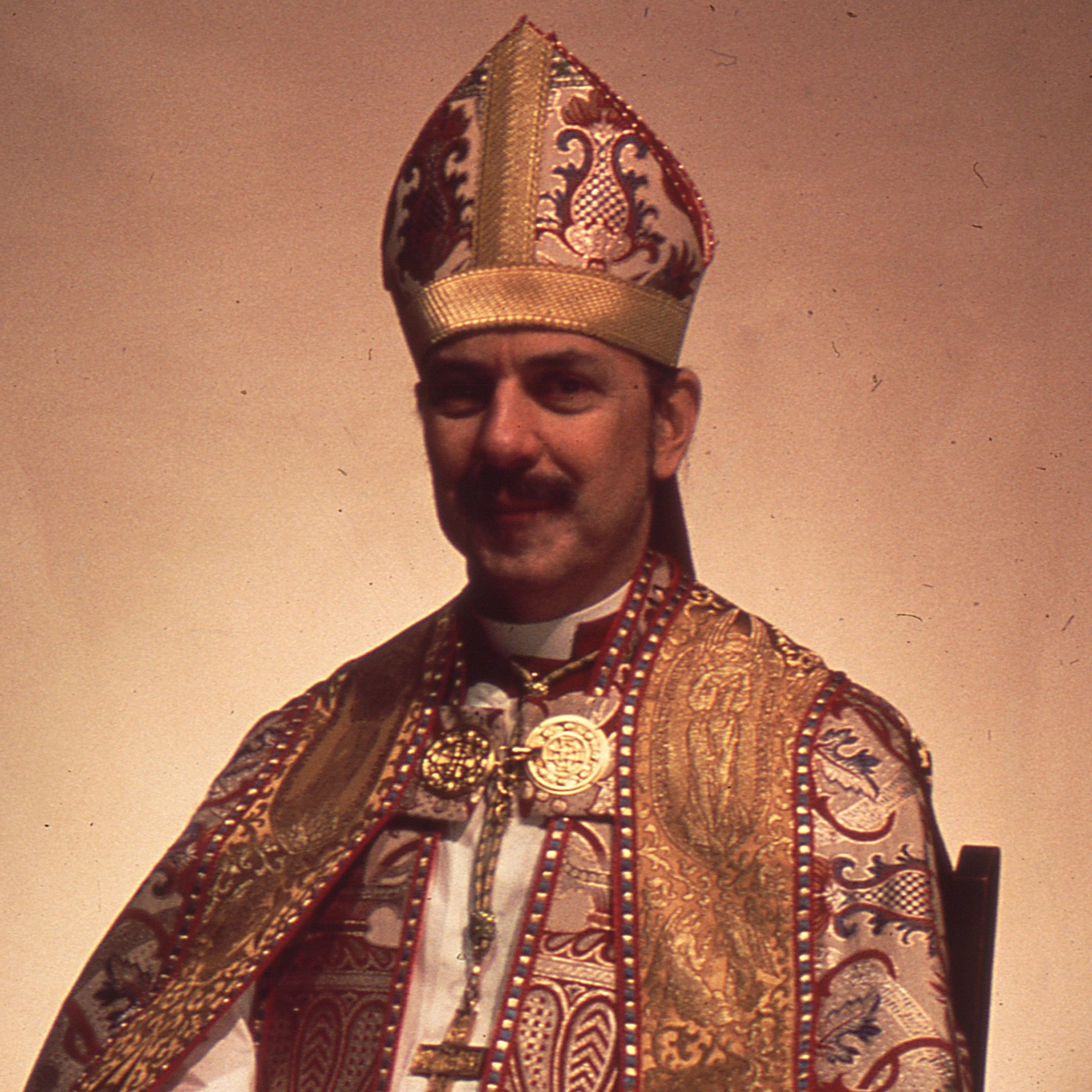
Robert Mary Clement appears in episcopal vestments following his consecration as bishop, adopting the visual language of Catholic episcopal office while embodying that authority as an openly gay church leader.

http://d2osek5pf4af91.cloudfront.net/archive_objects/LGBTQ-RAN/CBD_060.jpeg

Used as a symbol of episcopal and pastoral office, the bishop's crozier demonstrates how the Church of the Beloved Disciple inhabited recognizable Catholic forms of authority while placing them in the service of an LGBTQ Christian community.

http://d2osek5pf4af91.cloudfront.net/archive_objects/LGBTQ-RAN/CBD_061.jpeg

The Agnus Dei at the head of the bishop's crozier joins an ancient image of Christ with the traditional insignia of episcopal office, giving material form to the church's claim to Catholic sacramental authority.

http://d2osek5pf4af91.cloudfront.net/archive_objects/LGBTQ-RAN/CBD_072.jpeg

In October 1978, Bishop Robert Mary Clement ordains five priests for the Church of the Beloved Disciple, extending sacramental ministry through clergy whose vocations could be recognized and exercised openly within an LGBTQ-affirming community.

http://d2osek5pf4af91.cloudfront.net/archive_objects/LGBTQ-RAN/CBD_095.jpeg

John Darcy Noble appears in episcopal vestments with his crozier following his consecration as Bishop Coadjutor of New York of the Eucharistic Catholic Church on October 5, 1980.

http://d2osek5pf4af91.cloudfront.net/archive_objects/LGBTQ-RAN/CBD_093.pdf

These pages documenting John Darcy Noble's episcopal ministry place the Church of the Beloved Disciple within networks of independent Catholic Christianity through which episcopal authority was transmitted and recognized.

http://d2osek5pf4af91.cloudfront.net/archive_objects/LGBTQ-RAN/CBD_094.jpeg

This letter documents the recognition of episcopal authority, illustrating the importance of ecclesial relationships and lineage in establishing the legitimacy of sacramental ministry.


Creating a Queer Sacramental World

The Church of the Beloved Disciple did not merely occupy a Catholic sacred environment; its members created one. John Darcy Noble and Leo M. Joseph developed imagery centered upon St. John the Beloved, the congregation's patron and namesake, and translated it across stained glass, processional banners, and printed objects. In doing so, they gave the church a visual identity that was simultaneously particular to this community and deeply rooted in Catholic devotional tradition. This creative work reveals queer sacramentality as a form of sacred world-making. Traditional Christian images were neither rejected nor simply reproduced. They were inhabited and redesigned within an LGBTQ community. 

 
http://d2osek5pf4af91.cloudfront.net/archive_objects/LGBTQ-RAN/CBD_047.jpeg

Designed by John Darcy Noble and Leo M. Joseph for the Church of the Beloved Disciple, this stained-glass image depicted St. John the Beloved, the congregation's patron and namesake.

http://d2osek5pf4af91.cloudfront.net/archive_objects/LGBTQ-RAN/CBD_048.jpeg

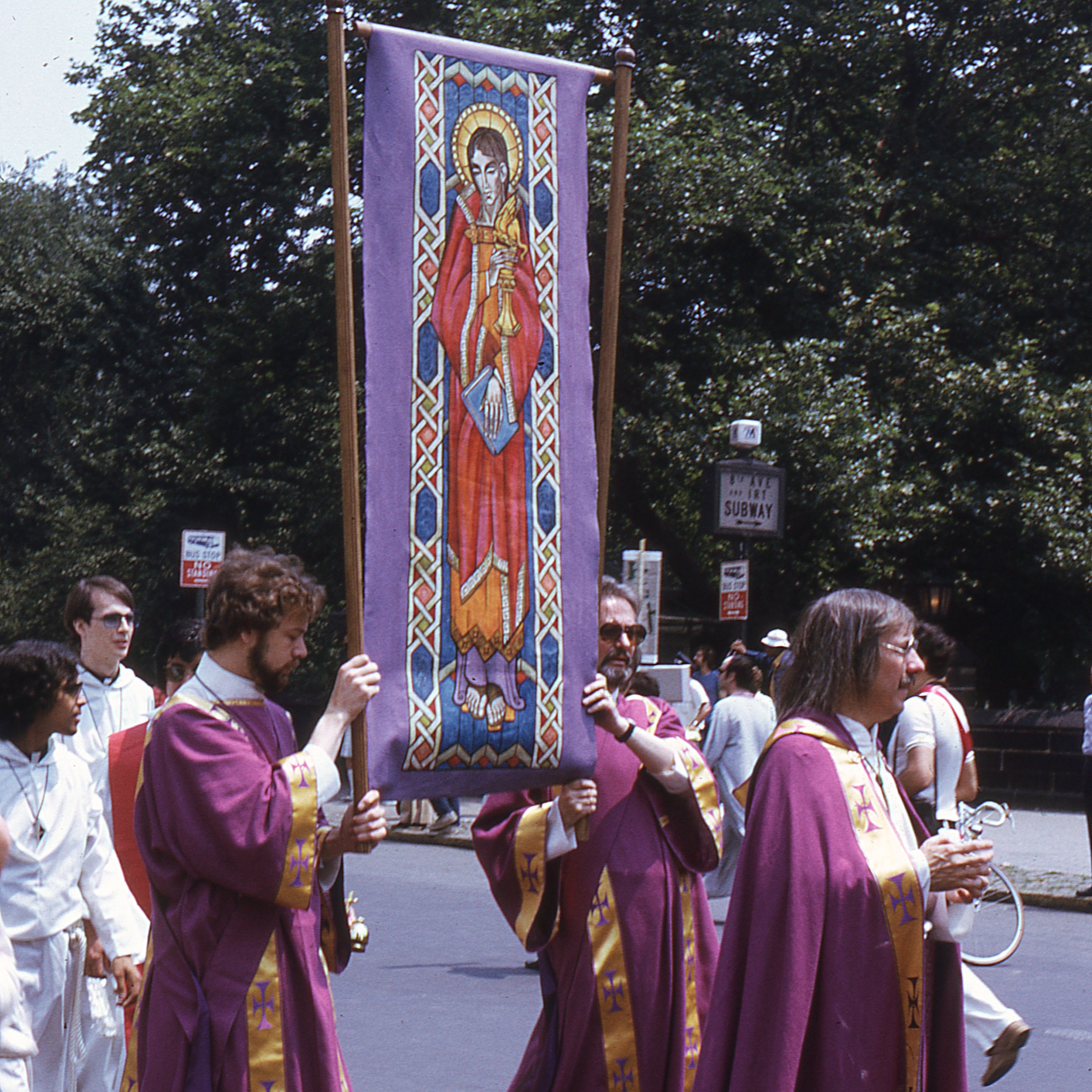
Designed by John Darcy Noble and Leo M. Joseph, this banner carried the image of St. John the Beloved from the sanctuary into processions, making the congregation's distinctive spiritual identity mobile and publicly visible.

http://d2osek5pf4af91.cloudfront.net/archive_objects/LGBTQ-RAN/CBD_049.jpeg

This commemorative greeting reproduces Noble and Joseph's image of St. John the Beloved, extending the church's patronal imagery from liturgical space into the everyday material life of the congregation.


Devotion, Embodiment, and Belonging

Marian devotion occupied an important place in the spiritual life of the Church of the Beloved Disciple. Statues of Mary, a Marian shrine built around an icon of the Virgin and Child, and public processions for the Feast of the Assumption expressed this devotion. Alongside the Eucharistic processions for Corpus Christi, these practices show an LGBTQ congregation participating deeply in forms of Catholic devotion that connected bodies, images, prayer, feast days, and sacred space. Yet the congregation did more than preserve inherited practices. The congregation claimed Catholic tradition by praying within it, creating within it, and making itself visible as part of it.

 
http://d2osek5pf4af91.cloudfront.net/archive_objects/LGBTQ-RAN/CBD_077.jpeg

Bishop Robert Mary Clement leads the Church of the Beloved Disciple’s procession for the Feast of the Assumption as clergy carry the church’s flower-decked statue of the Virgin Mary through Manhattan, bringing the congregation’s Marian devotion into public space.

http://d2osek5pf4af91.cloudfront.net/archive_objects/LGBTQ-RAN/CBD_044.jpeg

Displayed within the Church of the Beloved Disciple, this statue of the Virgin Mary reflects the importance of Marian devotion within the congregation's Catholic spiritual life.

http://d2osek5pf4af91.cloudfront.net/archive_objects/LGBTQ-RAN/CBD_045.jpeg

Another view of the church's Marian statue shows how familiar Catholic devotional imagery helped shape a sacred environment created for and inhabited by an LGBTQ congregation.

http://d2osek5pf4af91.cloudfront.net/archive_objects/LGBTQ-RAN/CBD_046.jpeg

This detail of the Virgin Mary and Christ Child connects the congregation's distinctive spiritual life with longstanding Catholic traditions of Marian devotion.

http://d2osek5pf4af91.cloudfront.net/archive_objects/LGBTQ-RAN/CBD_043.jpeg

Painted by John Darcy Noble, this icon of the Virgin and Child demonstrates that members of the Church of the Beloved Disciple not only inherited Catholic sacred imagery but contributed new works to its devotional life.

http://d2osek5pf4af91.cloudfront.net/archive_objects/LGBTQ-RAN/CBD_042.jpeg

Centered upon John Darcy Noble's icon of the Virgin and Child, the church's Marian shrine transformed sacred art created within the LGBTQ community into a focus of prayer and Catholic devotion.


Queer Lives as Sacramental Lives

From its first public Mass in July 1970, the Church of the Beloved Disciple made a theological claim: LGBTQ people belonged at the altar, around the Eucharistic table, and within the sacramental life of the Church. Queer people were not merely asking to be included in someone else's sacred world. Their bodies could receive and mediate grace; their relationships could be true and holy; their clergy could celebrate the sacraments; and their community could determine how inherited Christian forms might speak to their lives. Queer sacramentality named that larger claim: queer lives themselves could be understood, celebrated, and encountered as sacred.

 
http://d2osek5pf4af91.cloudfront.net/archive_objects/LGBTQ-RAN/CBD_015.jpg

Robert Mary Clement celebrates the first public Mass of the Church of the Beloved Disciple at the Church of the Holy Apostles on July 19, 1970, gathering an estimated 600 to 800 people around the Eucharist in an explicitly LGBTQ-affirming Catholic community.

http://d2osek5pf4af91.cloudfront.net/archive_objects/LGBTQ-RAN/CBD_001.jpeg

Jet magazine's May 13, 1971, feature on the Holy Union of Joan B. Kearse and Bobbi Jean Sanchez brought national attention to the Church of the Beloved Disciple's sacramental affirmation of same-sex relationships.

http://d2osek5pf4af91.cloudfront.net/archive_objects/LGBTQ-RAN/CBD_004.jpeg

Robert Mary Clement celebrates a Holy Union before a large congregation in the early 1970s, adapting traditional sacramental language to affirm a same-sex relationship through vows, blessing, prayer, and communal witness.

http://d2osek5pf4af91.cloudfront.net/archive_objects/LGBTQ-RAN/CBD_034.jpeg

Bishop Robert Mary Clement processes toward the altar with Fr. Leo M. Joseph and Fr. John Darcy Noble during the Easter Pontifical Mass on April 18, 1976, at 348 West 14th Street.